
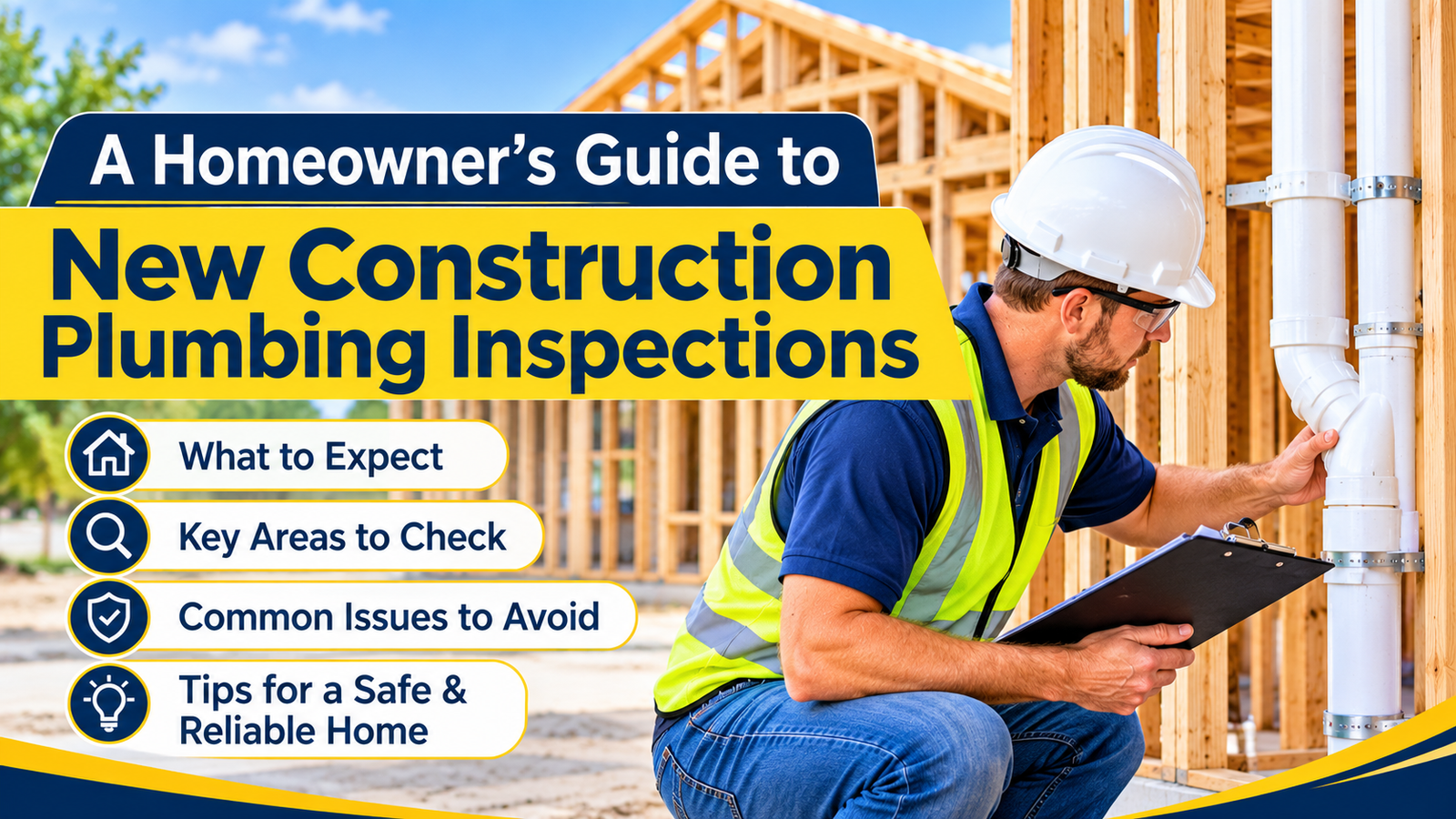
Most people assume a new home means the plumbing is bulletproof. It makes sense, right? It is all brand new. But once the drywall is up, nobody can see those pipes again, and a single bad joint can hide back there for years. New construction plumbing inspections are the safety net that stops that from happening.
At a few key moments during the build, an inspector checks every drain, vent, and water line before it gets buried for good. This guide breaks down what they check, when, and why it saves you thousands.
Why These Inspections Matter More Than You Think
A house being new does not mean the plumbing is perfect. Pipes get installed by regular people, and people rush, forget stuff, or just have an off day. An inspection is really just a second person double-checking that the new construction plumbing went in right, safely, and legally. The small mistakes stay hidden.
A small leak behind a wall can quietly rot the wood framing and grow mold for months before you ever catch a whiff. Weak water pressure, gurgling drains, even a sewer smell creeping into a room – a lot of that traces straight back to plumbing nobody bothered to check. A clean inspection also keeps your builder warranty valid and your resale value where it should be.
Three Key Inspection Phases
Your plumbing does not get checked once. It gets looked at three separate times as the house goes up.
- Underground (groundwork): Before the slab is poured, the inspector makes sure drain and vent pipes are the right size, sloped correctly, and holding water with zero leaks.
- Rough-in (top-out): After the framing is done but before drywall, every line in the walls gets pressure-tested with air or water. This is the big one, since almost everything is still out in the open.
- Final: Once the sinks, toilets, faucets, and water heater are in, the inspector actually runs them to confirm they fill, drain, and vent the way they should.
Each phase has to pass before the builder moves on to the next step. And that is smart. Catching a problem while the pipe is still exposed costs almost nothing. Finding that same problem behind finished tile and cabinets costs a small fortune.
What Inspectors Actually Look For
Inspectors follow your local plumbing code plus the national standards, and they do not cut corners. Here is what they are really checking for:
- Pipe size, slope, and whether the lines are strapped in tight so they do not sag over time
- Leak and pressure tests on both the supply side and the drain side
- Venting, so sewer gas heads up and out instead of back into your rooms
- Backflow protection and shut-off valves placed exactly where they belong
- The water heater hookup, including that temperature and pressure (T&P) relief valve
- Water pressure sitting in the healthy 40 to 60 PSI range, not too weak, not too harsh
Common Problems Caught Early
Even solid crews slip up. The usual suspects are pipes sloped the wrong way, a vent that got left out, loose fittings, lines that are too narrow, or a joint that starts leaking the second you add pressure. Bad water heater venting and pipes that sag show up plenty too.
None of this is a big deal if someone spots it now. It turns into a real headache when it gets sealed inside a wall, and you only find out two years later from a brown stain spreading across your ceiling. That is the entire reason they inspect in stages, so you fix it while it is still easy to reach.
A Homeowner’s Smart Move: Bring In Your Own Expert
The city inspector works for the city, not for you. They confirm the build meets code, but they are not really hunting down the little quality issues that will bug you later. That is why a lot of homeowners hire their own licensed plumber for a second set of eyes. Good plumbing installation services catch the stuff a quick code check can easily breeze right past.
If you are anywhere near Hempstead, this is where Early Birdie Plumbing earns its keep. They offer the kind of honest plumbing installation in Hempstead, TX, people actually trust, and they show up on time, every single time. Fixture setups, full-system installs, leak detection, and preventative maintenance – they handle all of it and treat your place like it is their own.
With 25-plus years behind them, upfront pricing, free estimates, and American-made parts, they make sure your new construction plumbing is done right the first time. Their line honestly sums it up: do not call in, call us, and we will be there early. They cover a 75-mile radius around Hempstead, TX.
Final Thoughts
Inspections can feel like boring paperwork, but really they are just protecting your money and your family. A few quick checks during the build save you from tearing walls apart down the road. Pair your required city inspections with solid plumbing installation services, and you can trust whatever is hidden behind those walls.
FAQs
- How many inspections does a new home need?
Ans: Usually three: underground, rough-in, and final. Each one happens at a different stage of the build. - What if the plumbing fails an inspection?
Ans: The plumber fixes the flagged issues and books a re-inspection. Work on that section pauses until it passes. - Can I be there for my inspection?
Ans: Often yes, and it is worth it. You can also bring your own plumber along with the city inspector. - How long does an inspection take?
Ans: Anywhere from 30 minutes to a couple of hours, depending on the size of the home. - Who pays for these inspections?
Ans: On new builds, the builder usually covers the required fees. A second-opinion plumber is on you.
Comments are closed