
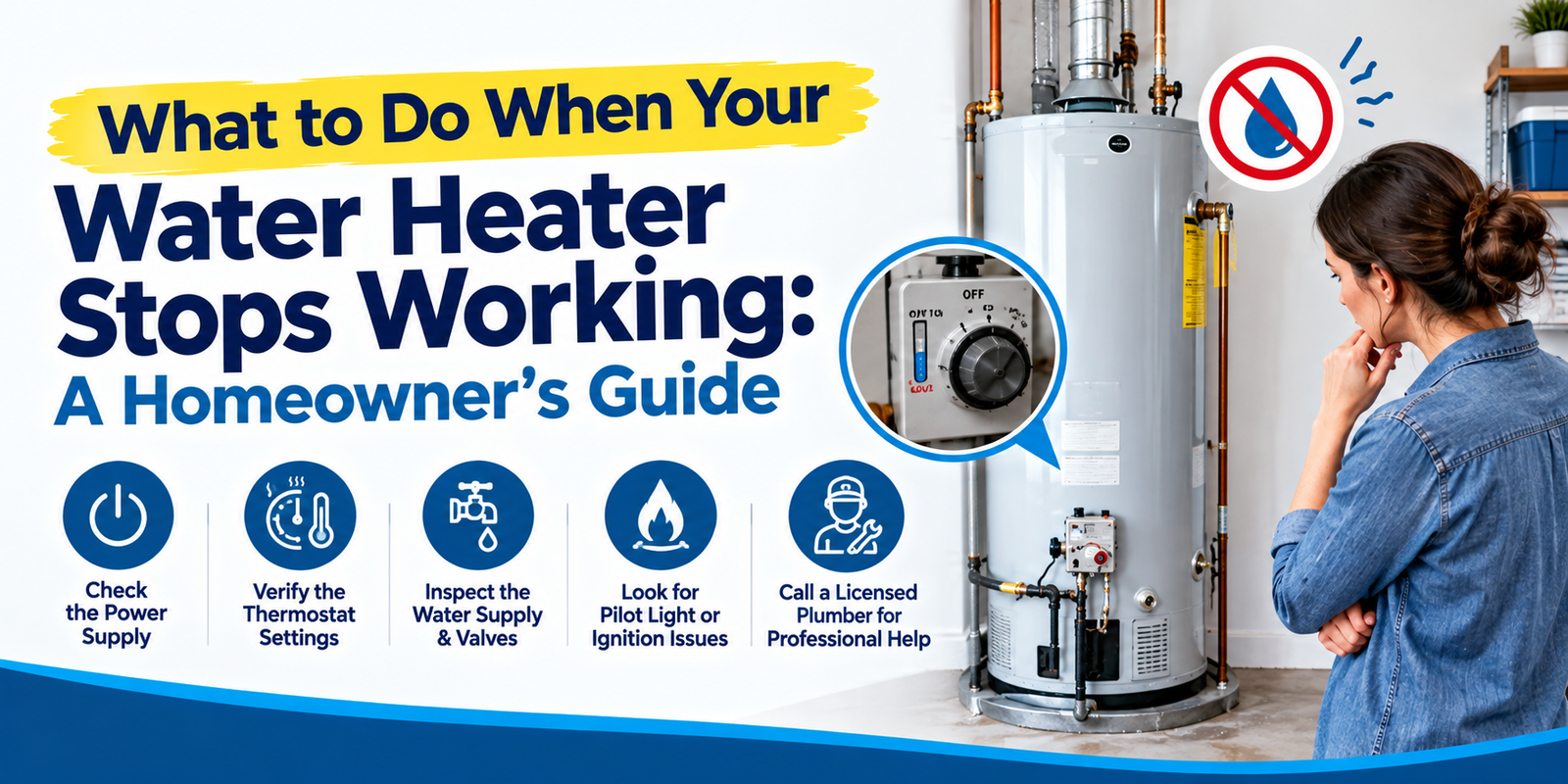
You turn the tap expecting warm water and get an icy slap instead. Annoying, right? Before you panic or assume you need a new unit, take a breath. A water heater not working is one of the most common home hiccups out there, and honestly, half the time the fix is something small you can spot yourself. This guide will explain what’s actually going wrong, what you can safely check on your own, and the exact moment you should stop poking around and hand it to a pro.
Spot the Warning Signs Early
Your heater usually drops hints before it fully gives up. Pay attention if you notice:
- Water going lukewarm or cold way too quickly
- Popping, banging, or rumbling noises from the tank
- Hot water looking rusty, cloudy, or smelling like metal
- Your energy bill creeping up for no clear reason
- Any dampness, rust, or a small puddle near the bottom
Catch these early, and you’ll likely save yourself a freezing morning and a fat repair bill.
Why Your Water Heater Suddenly Quits
Most breakdowns come down to a handful of everyday causes. Here’s what goes wrong:
- On electric models, a tripped breaker or a dead heating element is the top reason for no hot water.
- On gas models, the pilot light going out or a bad thermocouple stops the burner from lighting.
- Sediment. Over time, minerals sink and harden at the bottom of the tank. This is huge in hard-water Texas homes, and it’s often behind that rumbling sound.
- A worn-out thermostat that gives you water swinging between too hot and too cold.
- Leaks or rust, which are the ones you really can’t shrug off.
Safe DIY Water Heater Troubleshooting
First rule: don’t be a hero. Kill the power at the breaker marked “water heater” for electric units, or shut the gas off for gas ones. Let it cool before you open anything. And never mess with the T&P (temperature and pressure) valve while the tank’s hot, because scalding water can shoot right out. Then work through the basics:
- Look at the power or pilot: Flip a tripped breaker back on. For gas, relight the pilot using the steps printed right on the tank.
- Press the reset button: Most electric heaters have a little red button on the panel. If it popped, push it back in.
- Check the thermostat setting: The U.S. Department of Energy suggests 120°F for most homes. Too low and you’ll never get enough warm water.
- Drain a little sediment: Hearing rumbling? Draining a few gallons can help, though a full flush by a plumber does the real job.
- Hunt for leaks: Even a tiny puddle means stop and pick up the phone.
If none of that brings your hot water back, the problem’s deeper than a quick fix. That’s when solid water heater troubleshooting by a professional pays off. A trained plumber can actually test the heating element, thermostat, and gas valve with proper tools instead of you guessing which part died. Skipping the guesswork usually means cheaper hot water heater repair too, since you’re not throwing money at random parts.
Repair or Replace? Know the Numbers
This is the question everyone asks. A normal tank heater lasts about 8 to 12 years. Plumbers use a simple rule of thumb called the “50% rule”: if the repair costs anywhere near half the price of a brand-new unit, just replace it. A leaking tank? That’s almost always a replacement, because a cracked tank can’t be patched, period.
But if your unit’s still young and just needs a thermostat or heating element, that’s a cheap, quick fix worth doing. Old age, repeat repairs, rusty water, and climbing bills all point toward buying new. A newer, efficient model also cuts your monthly costs and gives steadier heat. And here’s a tip most folks skip: a yearly flush plus a check on the anode rod and T&P valve can genuinely add years to whatever unit you’ve got.
When to Call an Emergency Plumber
Some things just can’t sit until Monday. Call an emergency plumber right away if you spot any of these:
- A gas smell near the heater. Leave the house first, then call.
- Water flooding or pouring out of the tank.
- Rusty water paired with a bulging or badly corroded tank.
- No hot water during a freeze, since your pipes are now at risk too.
And that’s where Early Birdie Plumbing, LLC, has your back. We cover Hempstead and a full 75-mile radius, and folks around here trust us for honest water heater repair in Hempstead, TX. Whether it’s a big job or a small one, we handle it. With over 25 years of experience, upfront pricing, free estimates, and American-made parts, we actually show up when we say we will. Call us. We’ll be there early.
Call or text +1 832-544-6621 whenever your water goes cold. Keeping God first and your home comfy, we’ll get that hot water flowing again fast.
FAQs
- Why is there running water but no hot water?
Ans: That’s usually a heating problem, not a supply one. Check the breaker, pilot, and reset button first. A dead element or thermostat is often the real culprit. - How long should a water heater last?
Ans: Around 8 to 12 years for tanks, longer for tankless. Past 10 years with frequent issues, replacing beating, and repairing. - Can I fix it myself?
Ans: Simple stuff like resetting a breaker or relighting the pilot, sure. Anything with gas, wiring, or leaks should go to a licensed plumber. - What causes sudden loss of hot water?
Ans: Usually a tripped breaker, dead pilot, bad element, or heavy sediment. A quick pro check pins it down without the guessing. - Do you offer emergency service near Hempstead, TX?
Ans: Yes. We run 24/7 emergency service across a 75-mile radius. Just call or text +1 832-544-6621, and we’ll head over quickly.